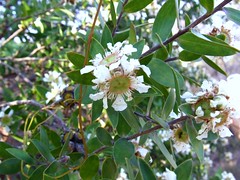
Wallum Mapping – Diurnal Variation
Shannon won highly commended at the Noosa Travelling Scholarship awards with her stunning work Wallum Mapping – Diurnal Variation. News article here . Congratulations Shannon!

 The process of making new work is harder than I usually like to reveal for fear of sounding a little too highly strung and artistic. It starts a long time before a single mark has been made and swirls and gestates for anything up to a few years. The collabotaive process adds another element that hasn't come into my working process before. Rebecca's brooches got me thinking about the ferns in the wallum, the way she connects two disparate materials with silver, the threads that connect all the wallum flora and all the ideas we continually revisit, merging and submerging. Sometimes an idea that one of us has bought up many times seems like a breakthrough when we are finally at a stage of being able to appreciate it.
 These pots are maps. The marks are intended to draw the viewer over the surface, they map the volume and exterior of the vessel, the journeys I've taken through the wallum and the creative process.
 Arthur H Robinson states that a map that is not properly designed will be a "cartographic failure". "The intent of the map should be illustrated in a manner in which the percipient acknowledges its purpose in a timely fashion. The term percipient refers to the person receiving information and was coined by Robinson. "(from wikipedia cartography entry)
 I wanted the percipient of these bowls to feel their way over the surface and through the wallum. I also wanted the pots to contain a secondary map of the collaboration which doesn't sound so dry and boring when I refer to it as the inspiration and alchemy that occurs when two like -minded and wildly different artists get together.
 Mapmakers claim that maps should contain a wealth of information and be multivariate. The richness of information in a map generates hypothesis, stimulates ideas and further research. Perhaps the purpose of art and the purpose of mapping intersect.
 First day at Canberra Glassworks I was very nervous. I had to work with glassblower Annette Blair to make the "swamp bubbles" for the Swamp Cartography exhibition. I've never worked with glass before and, as I labored over my sketchbook only to produce some very basic drawings I realize how much I rely on touching my materials to make my work. I make thousands of little decisions when I'm making, from the very moment I cut the bag of clay open right up until deciding how slowly to dry the piece out I'm tweaking and adjusting to what the materials are telling me they can do. Designing a piece in a hands off way is a totally different mindset.
 I'm so used to working in contact with the materials that in some ways I can't even tell what the piece is like until I touch it. You see this in crafts of all types from the way bakers touch the dough through to the way mechanics cradle engine parts in their hands. The touch is what's telling them about the object. Entering a process where there is no touch literally felt like being blind, weirdly panicky and uncertain.
 But...Annette did a fabulous job. It turned out that we liked the same colours and when I said "Brownish /purple" she really knew what I meant. This was instantly reassuring! Here is what she blew...swamp bubbles
 Aren't they beautiful?
 Pouched Coral Fern and wallum impressions on Southern Ice porcelain.
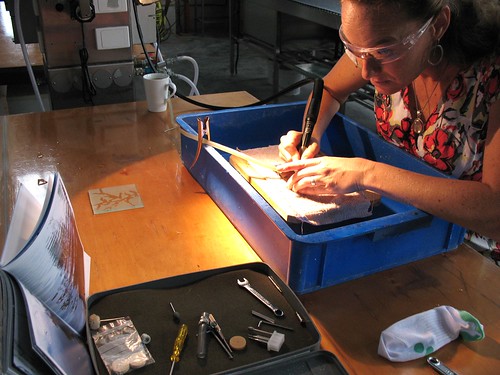
Rebecca the Wrecker and I have just spent 3 days at Canberra Glassworks doing a masterclass with glass artist and teacher extraordinaire Kirstie Rea. We had an amazing, inspiring time.
Canberra Glassworks is a state of the art facility based in an old power station. There are so many workshops covering different aspects of glass forming that we didn't get to see them all, the cold shop, the mold making room and the sandblasters were the ones we concentrated on. Once again we came back to our impressions from the wallum as the source of inspiration and made molds for glass using these.
I was particularly interested in the sandblasting which combines a painterly approach as the resist used is PVA glue. For these little pieces I sandblasted brushbox blossom silhouettes onto the back of "float" glass (common window glass) and used a diamond stylise to etch a drawing into the glass on the opposite side.

Glass engraving is such an immediate way of mark making, the scratchiness of the drawing echoes the twiggy scratchiness of wallum vegetation. I really liked using the window glass as the everyday nature of this material creates a subconscious visual reference linking the glass drawing to windows and all that they represent. The automatic assumption with a window being to look through or out of it, hopefully the viewer of this type of piece would be inexorably drawn towards the drawing to looking closely at and through it!
While we were in Canberra we did a talk for the ceramics students at the Australian National university Ceramics Department. Rebecca and I were struck by the vibrant, international diversity at both ANU and the Glassworks. The place is buzzing with international artists coming and going, Australian artists and students are constantly encouraged to make international connections in terms of residencies and, entering competitions and other professional development programs. It is very exciting for studio artists to be in the hustle and bustle of a creative, institutional atmosphere and I highly recommend anyone thinking of coming to Australia to consider doing a residency or a degree at Canberra Glassworks or ANU.


 This is the first wallum work out of the kiln. This works directly from wallum impressions- in this case of a small plant called "Hatpins" and a tiny banksia with roots. I pressed the plant directly into the clay and fired it , the plant matter was burnt off in the firing. The glaze is an oxidized celadon.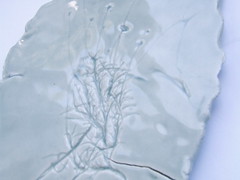

 Shane took us along an old road shaded by the huge Bloodwood trees, there was an eagles nest , big enough to house human children balanced high up.
 We took a lot of impressions in clay and our weird resin products. We took a lot of impressions in our impressionable brains, ancient stories, vegetation, dried leaves stippled shadows , in that strange, filtering, creative, process.
 Last week Rebecca and I both headed from our homes with cars full of friends/supporters and children to the lovely wallum of Crumunda Park at Currimundi Lake (Kathleen McArthur) Conservation Park. Arriving late, in various degrees of disarray we were met by Suzanne Aspland a local authority on the wallum. It seemed as if Suzanne was familiar with every tiny plant along the path as we walked through the ti-tree and paperbark forest and entered the golden, late afternoon light of the wallum heath.
 Just as the sun went down we saw this beautiful ground orchid at the side of the path. Hidden under the trees this weirdly spotted delicate plant was the highlight of the day.